Where do beach driftwood logs come from?
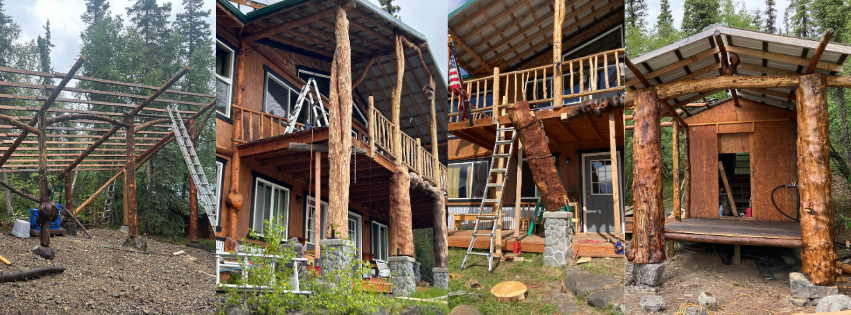
In 2007, my son Micah and I started building the family lodge at Lake Clark National Park and Preserve. During 3 weeks in July my sons Micah, Josiah and wife Marge broke ground and started building our dream.
As we cleared the land Micah harvested some timber from our plot and other private land to use in construction of the lodge. From then until now we have also salvaged dead trees and driftwood that ended up in Lake Clark Preserve, being washed out from the rivers feeding into the lake. Each spring the rivers will typically have heavy flood waters that erode some of the banks, which makes the trees dislodge and fall over into the river current. This process is a natural event on all fast water rivers and has been going on for eons of time. Logs can jam up to make the river unpassable to a boat, which happened on the Kijik River this past summer. The high water flooding can change channels of rivers naturally as banks wash out and then new growth of cottonwood and willows start growing, thus creating a food for moose and beavers. The environment is always changing and another new cycle continues.
When the tree washes into the river with its root ball, it will take a journey 1 to 50 miles down the river to the lake. It can get lodged and dammed up, extending their journey down the river for 5,10,20 years or more and some get lodged on a bank indefinitely. If and when they make it down the river they will end up floating in the lake and blown into a bay or washed up on the beaches. The longer they get thrashed around in the river or beaches the more it tears the bark off and removes the branches.
When the logs lose the bark off the trunk it can prevent the log from rotting for many years while sitting on the beach, or if submerged in water it will not rot. That is because it will dry out the surface of the wood, preventing fungus growth. These logs will have a bleached color if left on the beach or a bronze or darker mineral stained surface the longer it's in the water. We have been able to repurpose these logs for firewood, furniture or building materials. Because of the harsh growing conditions, some of these logs can be very unique and are not always your typical straight logs.
Ironically, in contrast, if a log falls to the tundra forest floor with the bark on, it will rot half way through in just a couple of years here in Alaska. The bark holds moisture and allows fungus and insects to start breaking the wood fibers down rapidly.